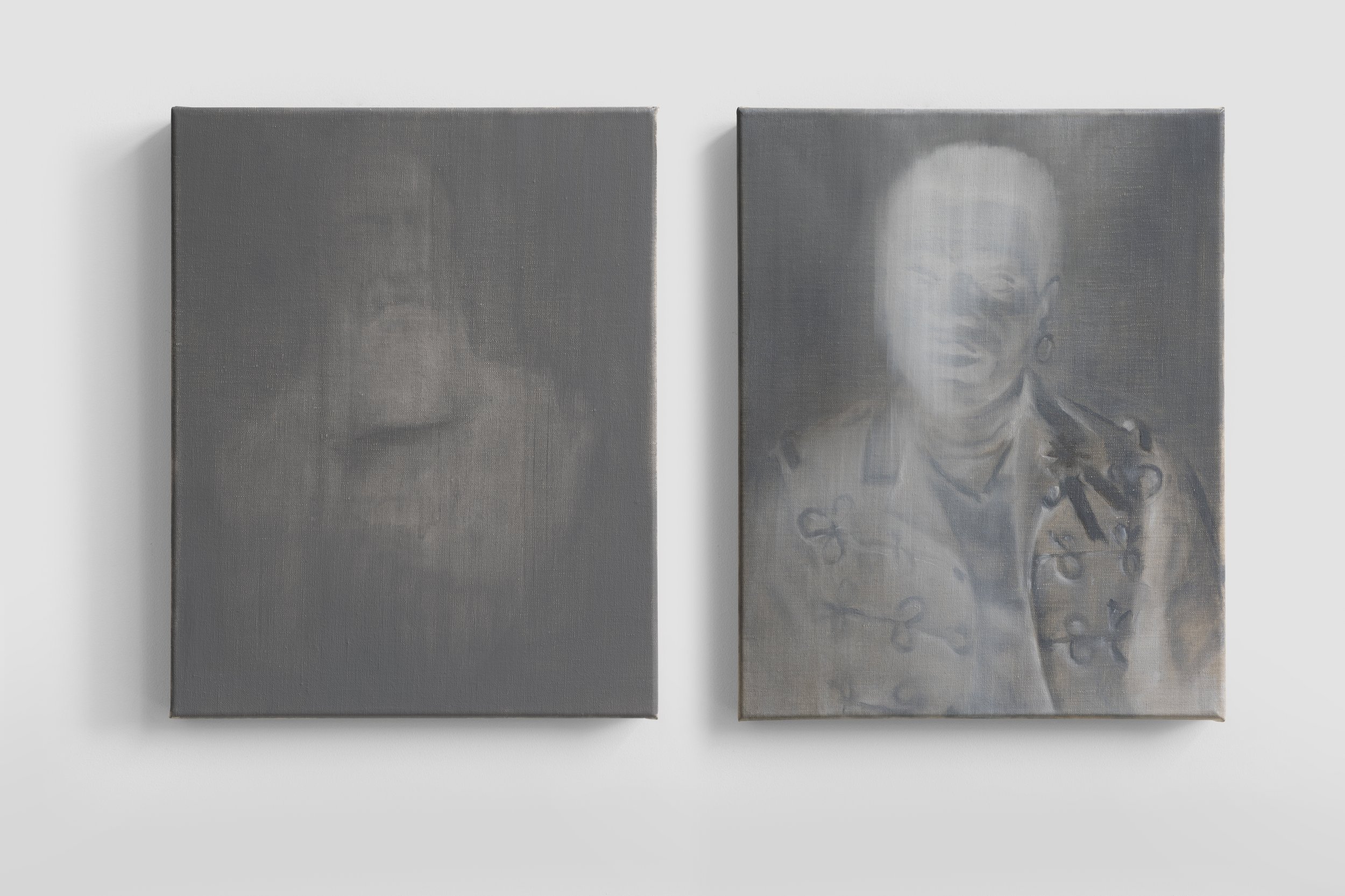
The Ghost, The King, 2026
oil on Belgian linen
each 50 × 60 cm (15,8 × 19,7 inches)
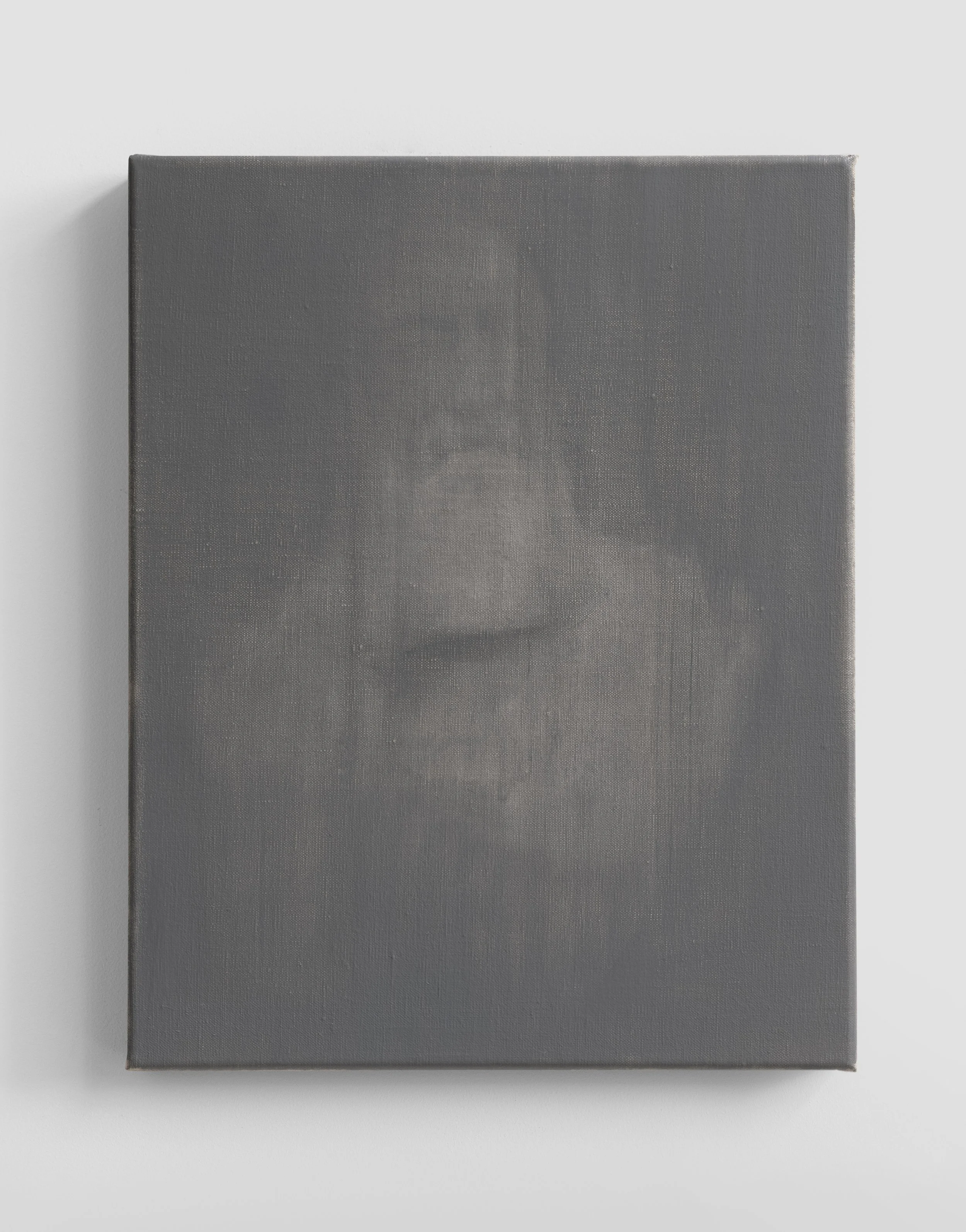
The Ghost, 2026
oil on Belgian linen
50 × 60 cm (15,8 × 19,7 inches)
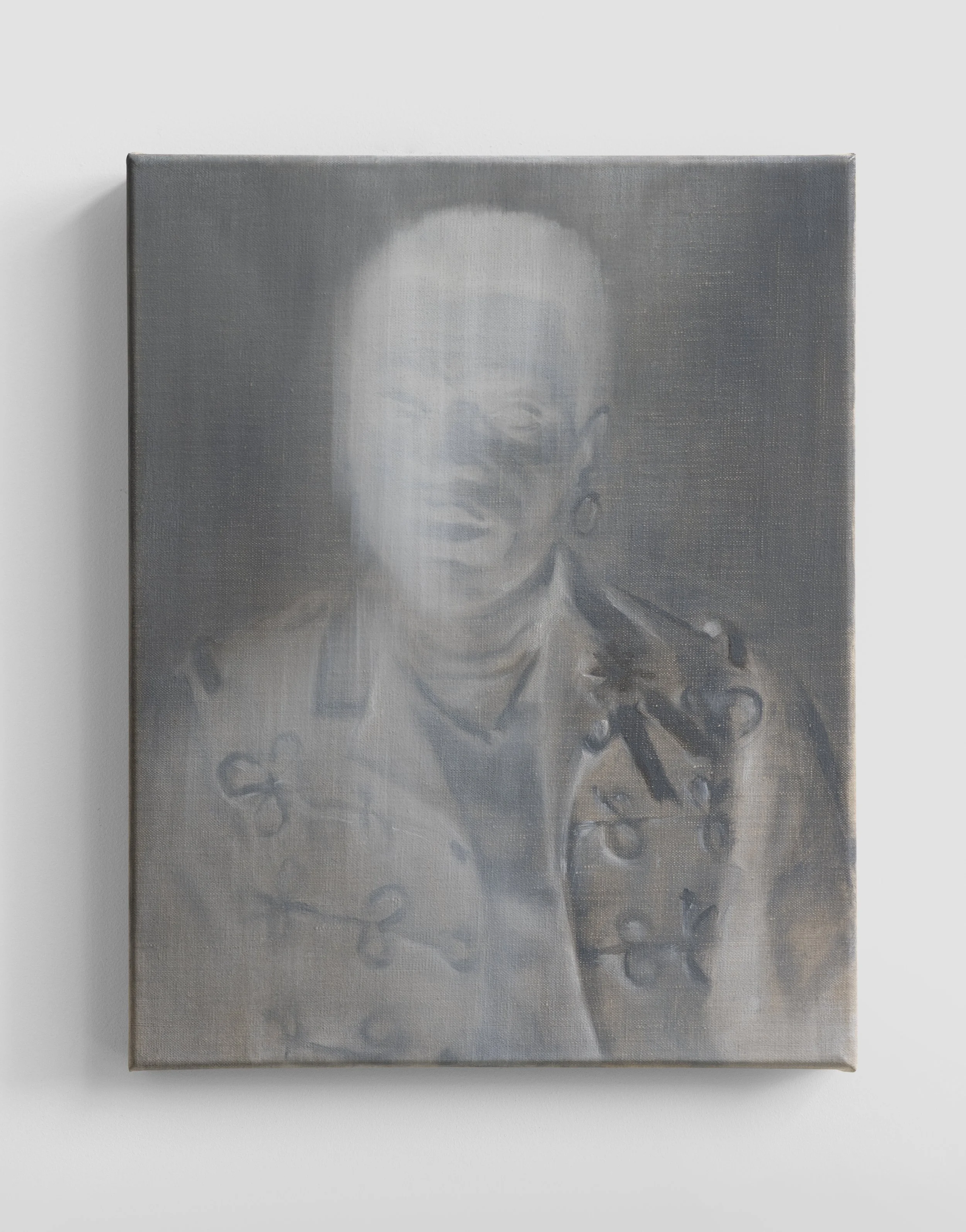
The King (Masala), 2026
oil on Belgian linen
50 × 60 cm (15,8 × 19,7 inches)
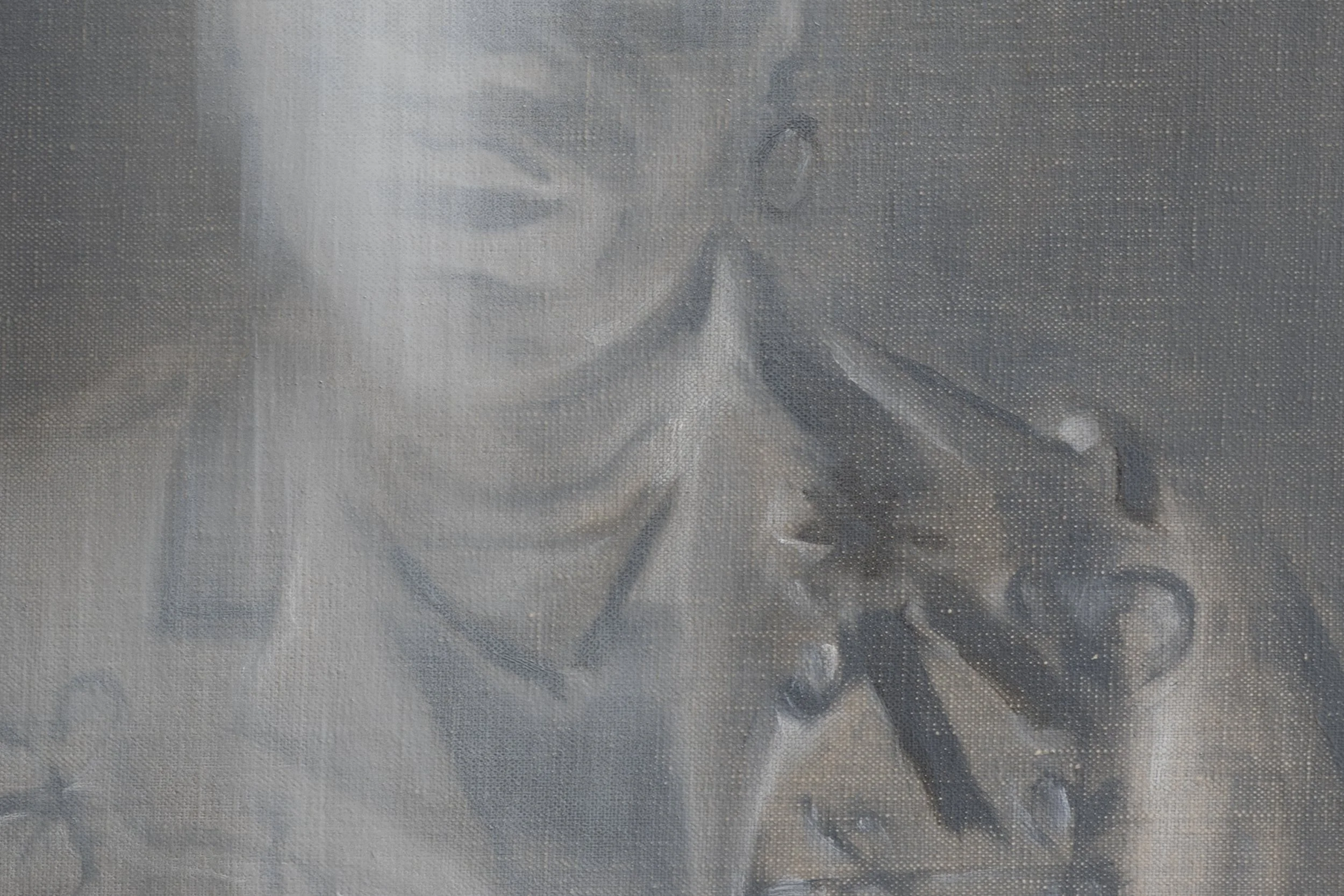
The King (Masala), 2026 (detail)
oil on Belgian linen
50 × 60 cm (15,8 × 19,7 inches)
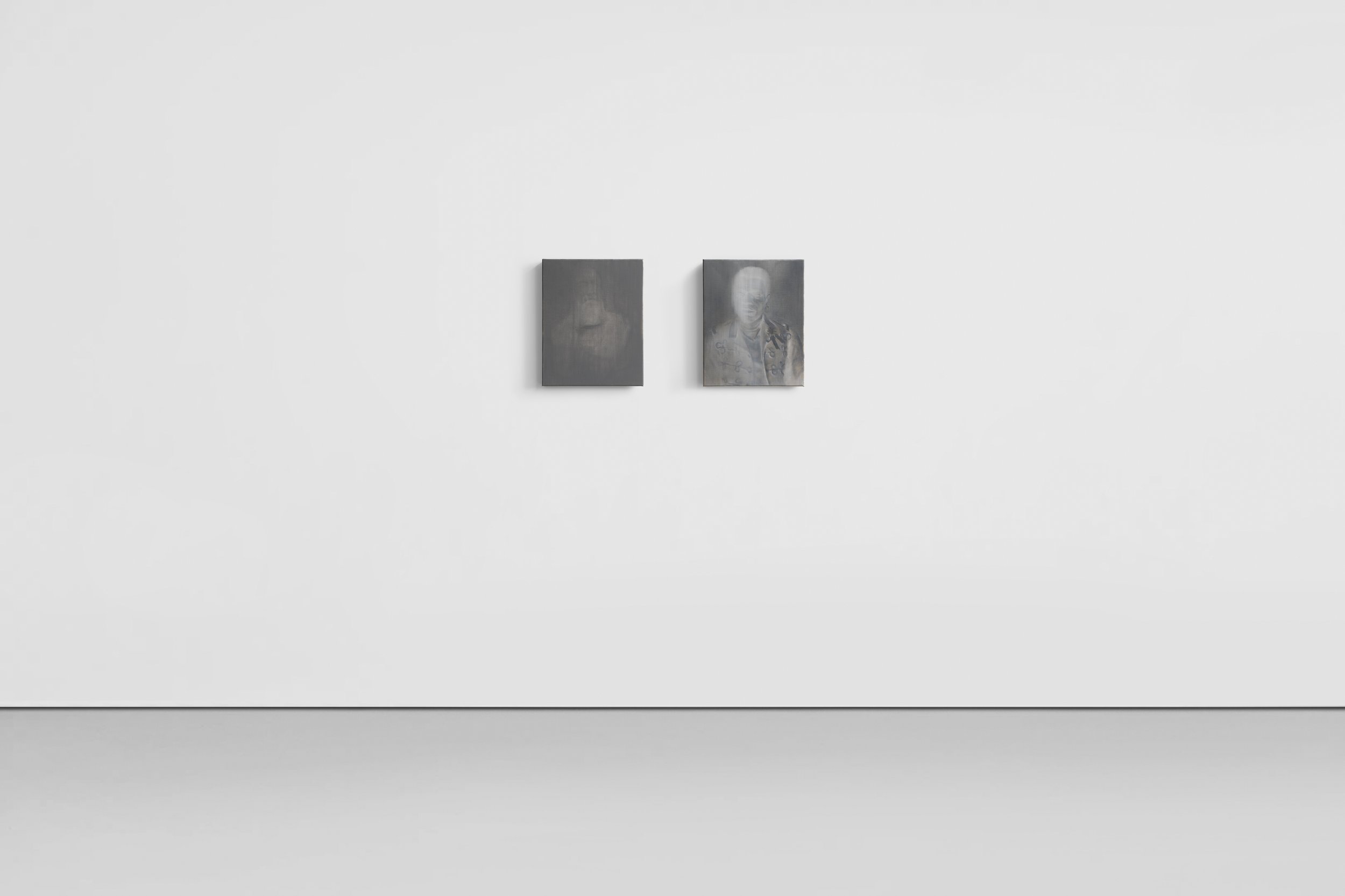
The Ghost, The King, 2026 (gallery view)
oil on Belgian linen
each 50 × 60 cm (15,8 × 19,7 inches)
The two paintings form a diptych structured around the instability of authority as it appears in images. Both figures are presented frontally, isolated against a neutral ground, and rendered at a scale that recalls the conventions of portraiture. Yet the works do not affirm identity; they examine the conditions under which it is constructed and perceived.
Both images emerge from the same historical framework: the colonial programme in Belgium at the end of the nineteenth century. One refers to the sculptural representation of King Leopold II¹, whose figure remains inseparable from the institutional history of the Congo Free State and the later AfricaMuseum in Tervuren. The other refers to Masala, a Congolese man whose image circulated within colonial display practices and was later framed through an imposed title of authority².
The works mark two opposed poles within the same visual system. In one, power is fixed through monument, repetition, and recognisability. In the other, identity is displaced through exhibition, reproduction, and misattribution. Both figures are produced by structures that assign visibility before the image is even seen.
In The Ghost, the image of Leopold is subjected to repeated interventions: painted, overpainted, scraped, and repainted. The form is partially removed, yet it persists. Despite its erosion, the figure remains immediately recognisable. The image resists disappearance.
In The King, the image is already displaced before painting begins: a photograph taken from a printed reproduction of a negative, as encountered in the exhibition The Early Gaze at FOMU Antwerp³. The face is overexposed, washed out by concentrated light. This whitening does not clarify the image; it neutralises it, reducing it to a surface of excess visibility.
The paintings do not reconstruct these histories. They register their conditions. What appears is not the figure itself, but its persistence within a field of representation that both fixes and distorts it.
In this sense, the works can be read in relation to an understanding of the image as index, as articulated by Rosalind Krauss⁴: not as a self-contained representation, but as a trace of a prior reality. Both paintings function less as portraits than as sites where visual evidence and historical designation intersect without fully coinciding.
Technical note:
The Ghost is based on a personal photograph of a bust of King Leopold II seen at the AfricaMuseum in Tervuren. The painted surface was repeatedly worked, erased, scraped, and repainted. The King is based on a personal photograph of a poster showing a negative portrait of Masala, seen in the exhibition The Early Gaze at FOMU Antwerp. The overexposed area in the painting corresponds to the light of a spotlight falling onto the poster.
Sources:
1 King Leopold II In: Wikipedia – The Free Encyclopedia, URL: https://en.wikipedia.org/wiki/Leopold_II_of_Belgium
2 AfricaMuseum. In: The human zoo of Tervuren (1897), URL: https://www.africamuseum.be/en/discover/history_articles/the_human_zoo_of_tervuren_1897
3 FOMU Antwerpen:
The Early Gaze., URL: https://www.fotomuseum.be/en/exhibitions/the-early-gaze
4 Historici.nl
In: Als objecten konden spreken. Over het vernieuwde Africamuseum in België.,
URL: https://www.historici.nl/als-objecten-konden-spreken-over-het-vernieuwde-africamuseum-in-belgie/
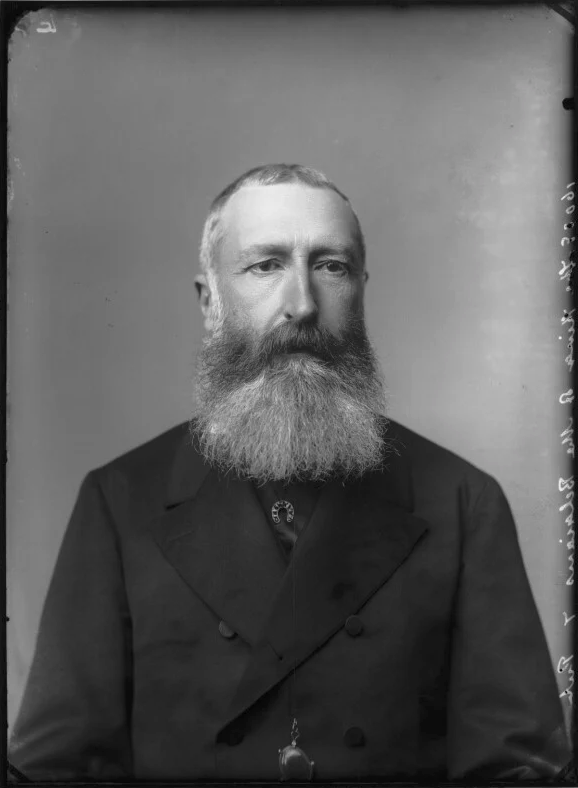
King Leopold II,
National Portrait Gallery
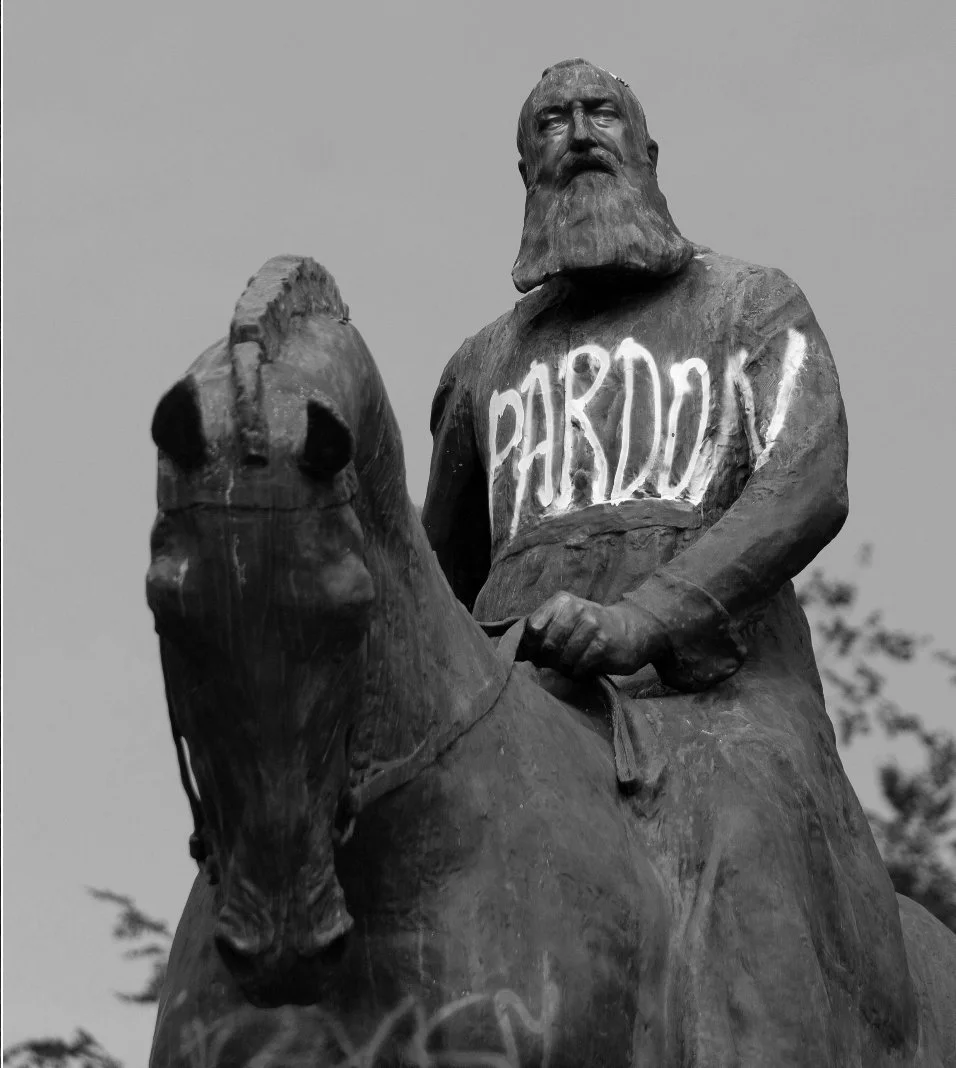
A bust of King Leopold II has been taken off public display in Ghent. itv.com
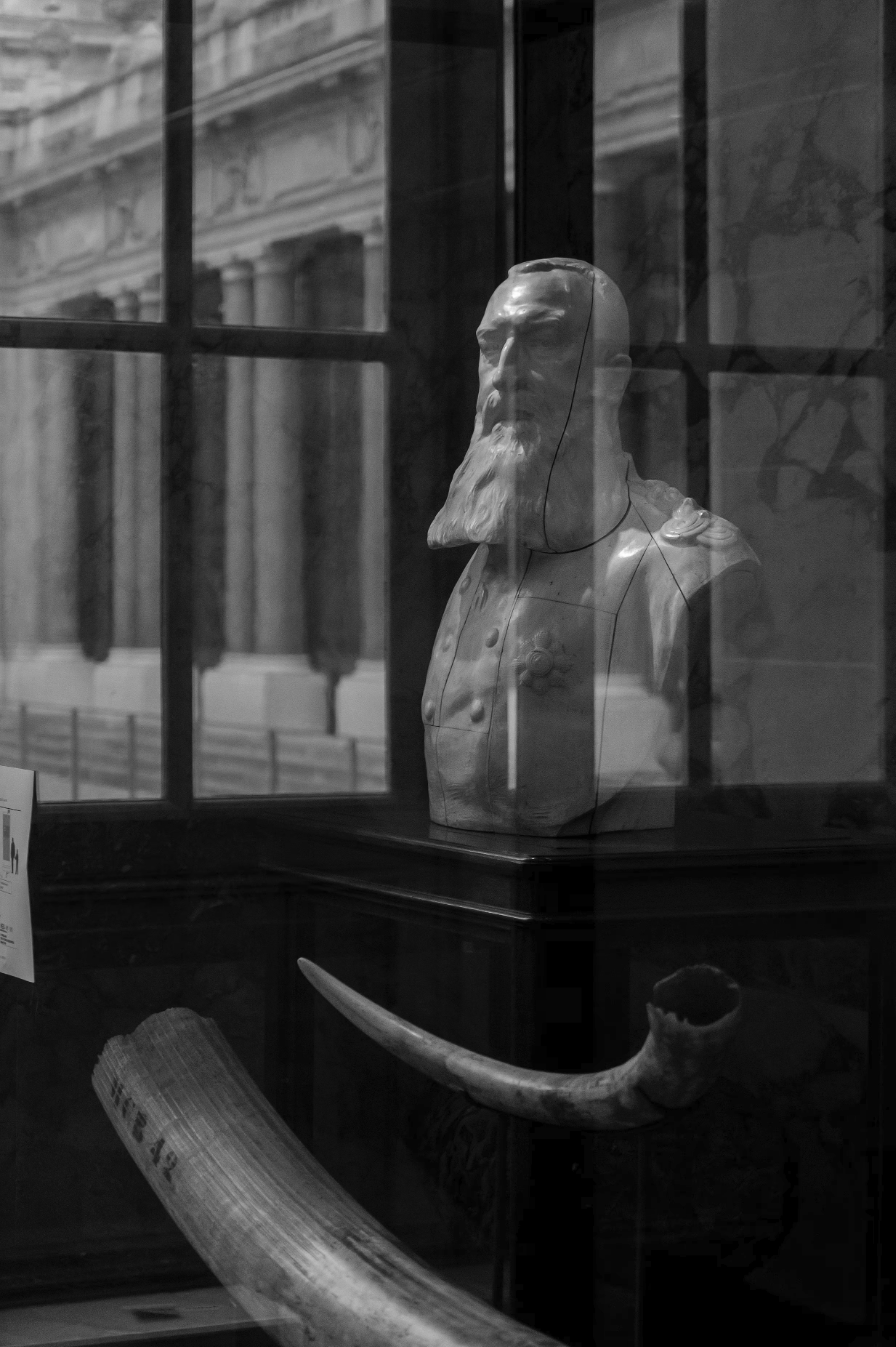
The bust of King Leopold
at Africa Museum Tervuren, Belgium
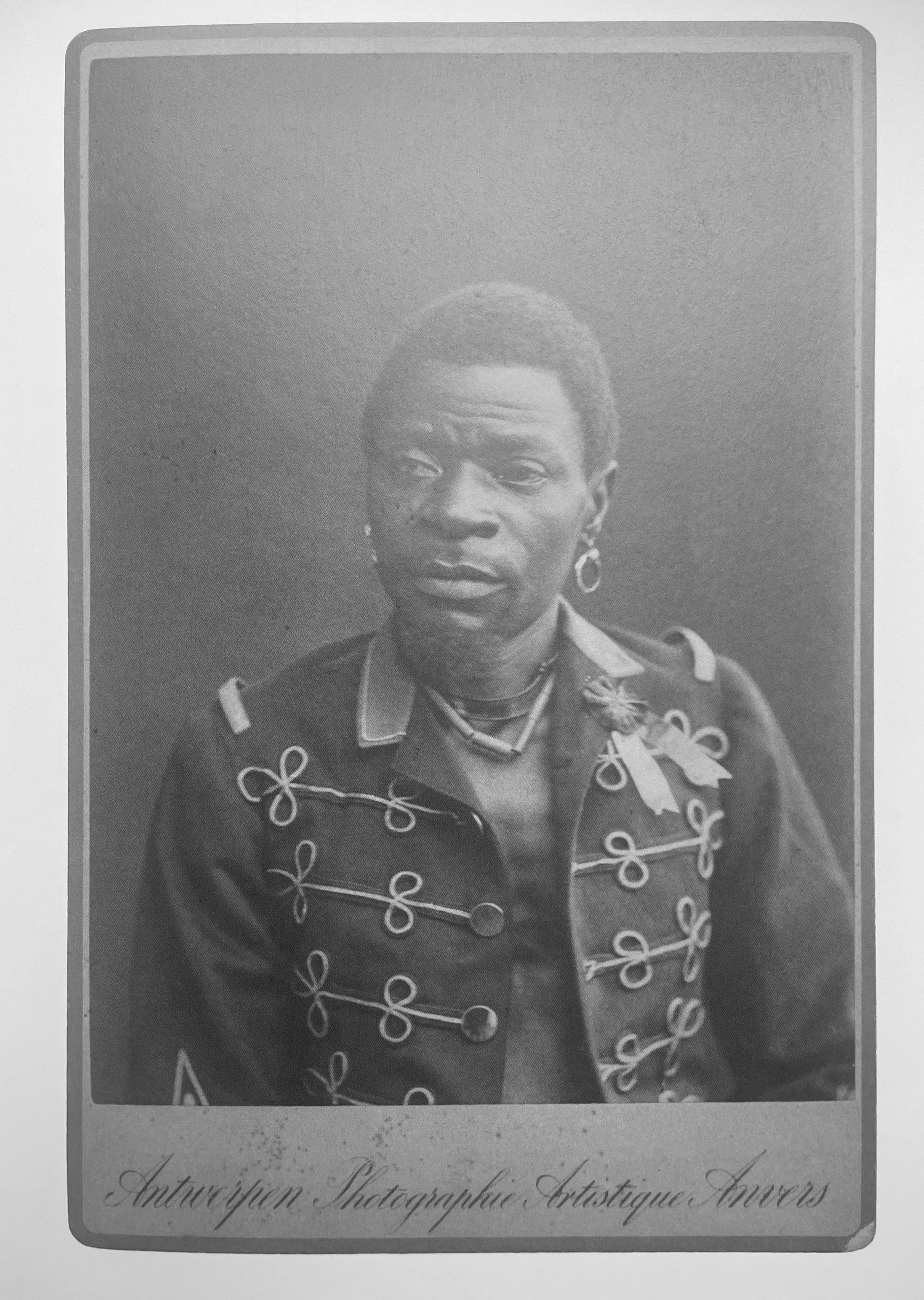
Portrait of Masala, 1885,
Jaques Eduard Van den Bemden, FOMU